SS United States: The Story of Frozen Rivets

When we think about the construction of the SS United States, it is easy to picture the enormous steel hull, the powerful engines, or the thousands of workers who transformed plans and raw materials into the fastest passenger liner in the world. But one of the most fascinating details of her construction involved something considerably smaller: Rivets.
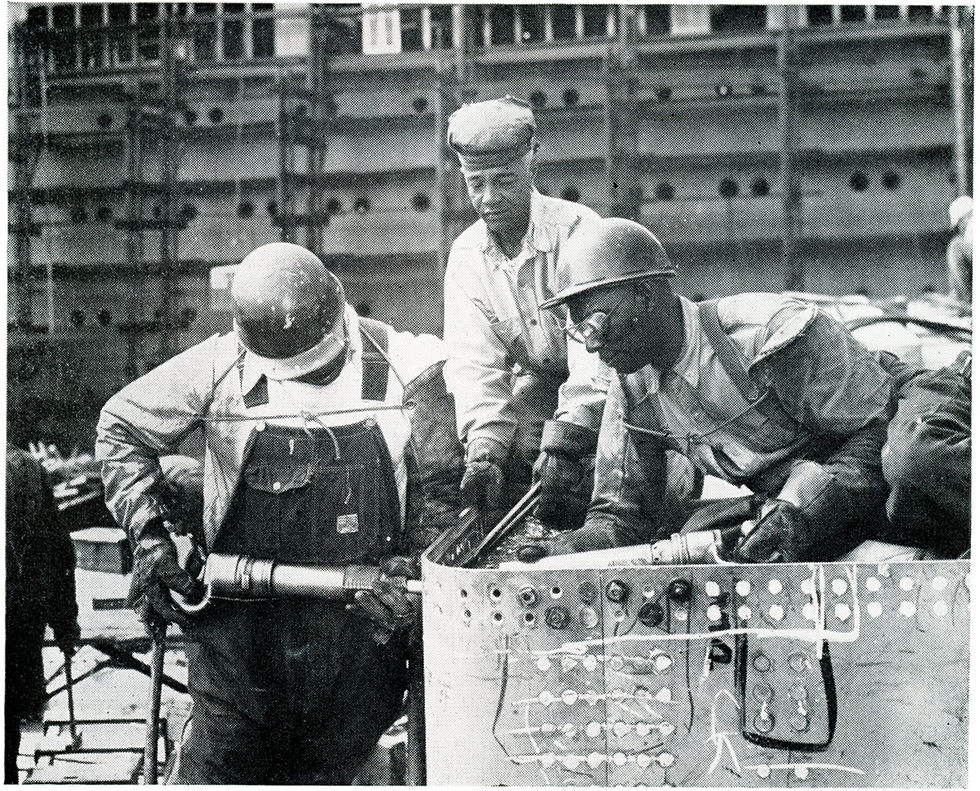
The Story of Frozen Rivets
For sixty-five years, stories of red-hot rivets had been a tradition Newport News Shipbuilding & Dry Dock Company. But the construction of the SS United States presented something different. Alongside the traditional hot steel rivets would be a vast number of ice-cold aluminum rivets. Aluminum was used extensively in the superstructure of the new liner. Several thousand tons of aluminum went into the ship's construction, and the aluminum rivets were used to fasten portions of this material together. Unlike conventional steel rivets, however, these aluminum rivets needed to be soft when they were driven. That requirement led to an unusual heat-treatment and storage process.

From Furnace to Freezer
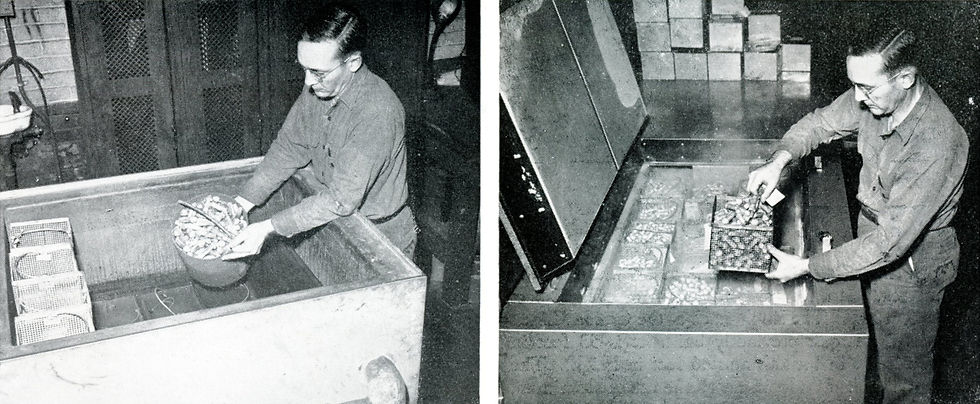
Before the aluminum rivets could be used, they underwent a carefully controlled treatment. First, the rivets were placed in a furnace and heated to approximately 1,040 degrees Fahrenheit for 30 minutes. This process, known as a solution treatment, was intended to bring the constituent alloy materials within the rivets into a solid solution. This left the rivets in a soft condition—the desirable state for driving. But the rivets couldn't simply be left sitting around after they were treated. Once removed from the furnace, they were quenched in running water to cool them. They were then dipped in alcohol to prevent frosting and to keep the rivets from sticking together once they were frozen. The next step was perhaps the most unusual. The rivets were placed in a deep freezer maintained at approximately 40 degrees below zero.

Keeping the Rivets Frozen
Insulated containers were used to transport the rivets to the ship. On the SS United States herself, ice cream cabinets stocked with dry ice were positioned at convenient locations around the ship and near the aluminum assembly plates where the rivets were to be used. This was essential because exposure to normal room temperature could cause the aluminum to undergo aging, or precipitation hardening. That condition was undesirable before the rivets were driven because the rivets needed to remain soft. In other words, the shipbuilders were deliberately keeping the rivets in a kind of temporary state: heat-treated, quenched, and then frozen until they were ready to become part of the ship.
Over A Million Rivets
The numbers involved were enormous. Approximately 250,000 steel rivets were used in the old-fashioned hot-riveting process on portions of the steel hull and other steel sections that were not welded. But the aluminum riveting operation was on an entirely different scale. Approximately 1,200,000 aluminum rivets of many different sizes were used in building the SS United States. Each one had to be treated, cooled, frozen, transported, stored, and ultimately driven into position while still in the desired soft condition. After the aluminum rivets had been driven, the situation changed again. Aging occurred after driving, resulting in greater strength compared with the quenched condition. The process therefore took advantage of the properties of the aluminum alloy itself: the rivets were soft enough to be driven into place and subsequently became stronger as they aged.

A Remarkable Piece of Shipbuilding History
The ship was built using technologies and techniques that were both traditional and highly advanced for their time. Conventional hot steel riveting existed alongside extensive welding and the innovative use of aluminum. And for more than a million aluminum rivets, the shipbuilders developed an elaborate system to ensure that each rivet remained in the correct condition until the moment it was needed.

The journey of a single aluminum rivet was remarkably complex. Yet there were approximately 1.2 million of them. Each was a tiny component of a much larger engineering achievement. Today, the frozen rivets are an easily overlooked detail of the United States story. They illustrate something fundamental about the ship's construction: her remarkable performance was the product of thousands of individual engineering decisions, processes, and innovations. Over the decades, with the continual expansion and contraction of the aluminum superstructure, the aluminum rivet heads have popped off, separating from the rivet itself. But the next time you look at photographs of the SS United States under construction, it is worth remembering that somewhere behind those enormous steel and aluminum plates, were millions of carefully engineered connections—including more than a million aluminum rivets that literally had to be kept on ice.


Comments